How to Store and Reheat Thanksgiving Leftovers Safely
 Jessica Williams
In short
Refrigerate leftovers in shallow containers within 2 hours, eat them within 3–4 days or freeze them, and reheat to 165 °F; bring gravy to a rolling boil.
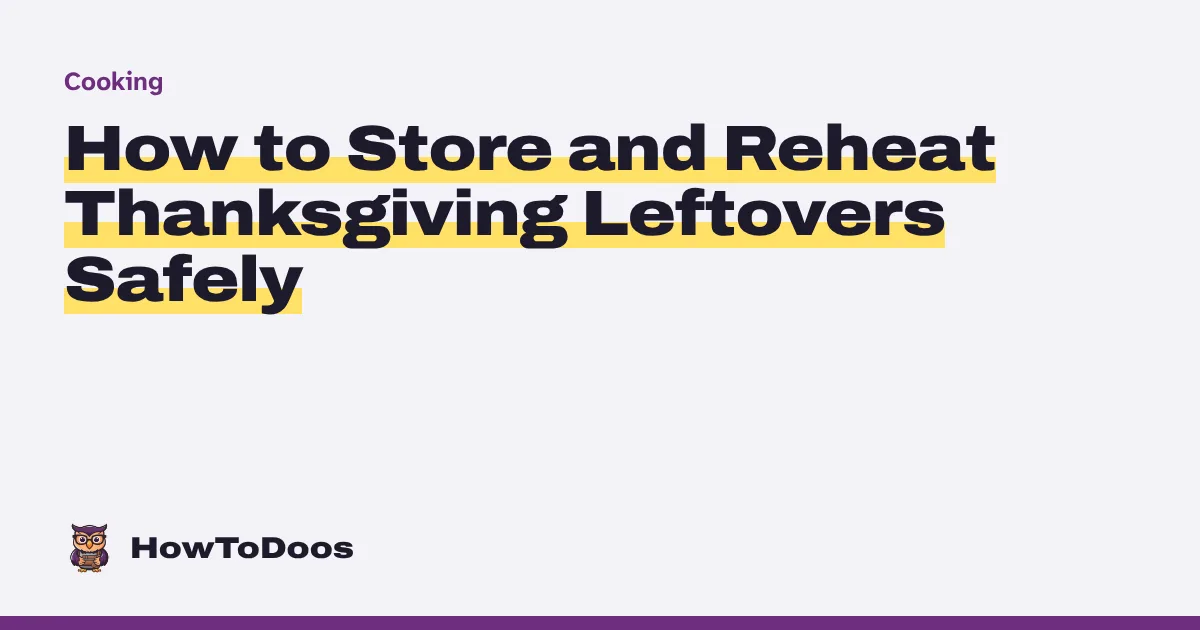
6 steps in this guide
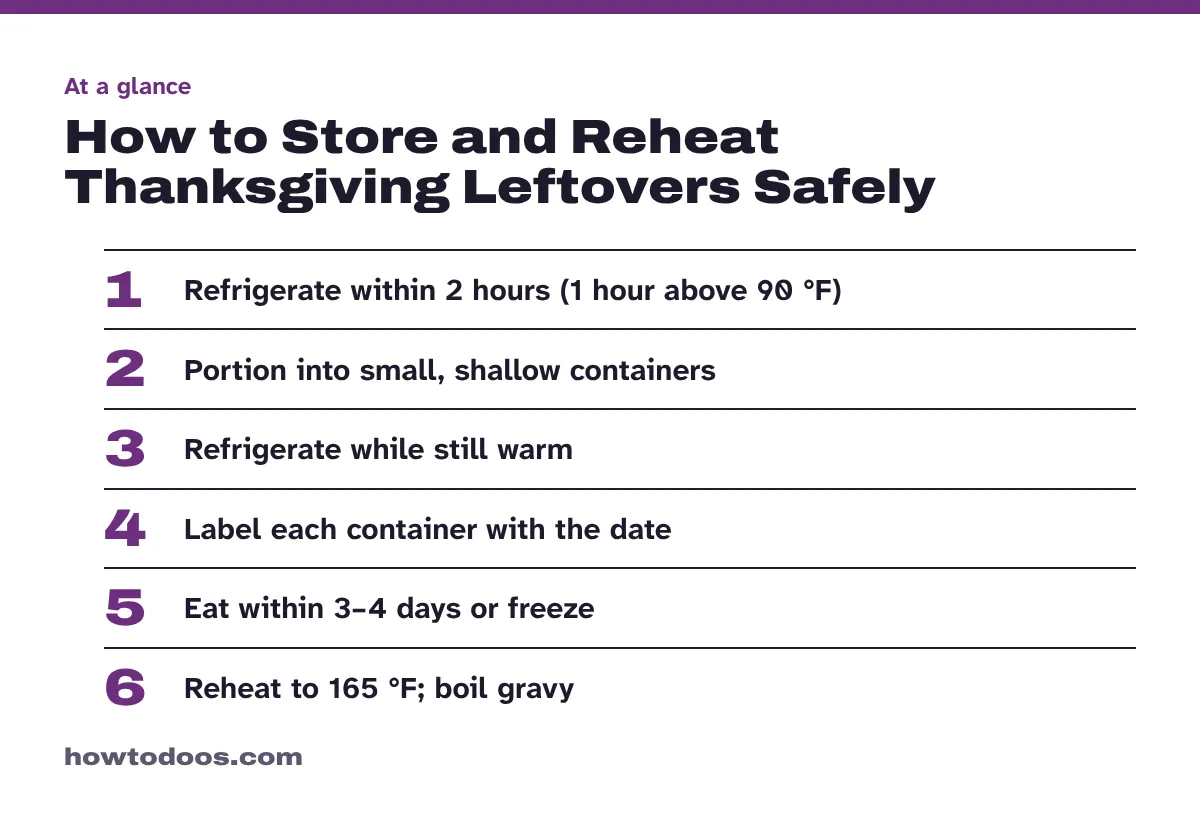
To store Thanksgiving leftovers safely, get them into the fridge or freezer within two hours of the meal, divided into small, shallow containers so they cool quickly. Eat refrigerated leftovers within three to four days or freeze them, and reheat everything to 165 °F (gravy to a rolling boil). With Thanksgiving on Thursday, November 26, 2026, that puts your fridge deadline at the Monday after.
The rules below come from the federal food-safety site FoodSafety.gov, which publishes the USDA’s holiday leftovers advice, and its companion guide Leftovers: The Gift that Keeps on Giving. They are simple, but a big meal and a long afternoon make them easy to forget.
What you need
- Small, shallow containers with lids (glass or plastic), or freezer bags for anything you plan to freeze
- Space in the fridge and freezer — clear a shelf before dinner
- A sharp knife and cutting board to portion the turkey
- A food thermometer for reheating
- A marker or labels to write the date on each container
If you haven’t carved the bird yet, our guide on how to carve a turkey shows how to get the meat off the bone neatly, which also makes it easier to store.
Steps
Step 1: Start the two-hour clock when the food leaves the oven
Perishable food should go into the fridge or freezer within two hours of coming out of the oven or the refrigerator, according to FoodSafety.gov. If the food has been somewhere warmer than 90 °F — outside on a warm day, or next to a hot oven — the limit drops to one hour.
The reason is the “danger zone” between 40 °F and 140 °F (4 °C to 60 °C), where bacteria multiply quickly. A buffet table at room temperature sits right in the middle of it. Set a phone timer when you serve, and pack up as soon as people finish eating rather than after dessert and coffee.
Step 2: Portion the turkey and sides into shallow containers
A whole turkey or a deep pot of stuffing takes too long to cool to a safe temperature in the middle, FoodSafety.gov warns. Instead:
- Cut the turkey into smaller pieces or slices and divide them between containers. The carcass can go in a separate bag if you want to make stock.
- Spoon stuffing, mashed potatoes and casseroles into shallow containers rather than leaving them in the baking dish.
- Pour gravy into a small, lidded container of its own.
- Put pies with dairy or egg fillings, such as pumpkin pie, in the fridge too.
Keep each container no more than a few inches deep so cold air can reach the centre.
Step 3: Refrigerate them while they’re still warm
You don’t need to let food cool on the counter first. FoodSafety.gov says leftovers can go into the fridge or freezer “as soon as possible”, even if they are still steaming. Waiting for food to reach room temperature only adds time in the danger zone.
Leave a little space between containers on the shelf so air can circulate, and don’t stack hot containers directly on top of each other.
Step 4: Label each container with the date
Write “Thanksgiving” or the date on each lid. It sounds fussy, but by Sunday most people can’t remember whether the stuffing came from Thursday or Friday’s second round. A date makes the next step easy.
Step 5: Eat within 3–4 days or freeze
Refrigerated leftovers keep for three to four days. After that, food can become unsafe even if it looks and smells fine — Virginia Tech’s food science department notes that the bacteria that cause illness don’t always change how food smells or looks. Its advice: “When in doubt, throw it out.”
If you won’t finish something in time, freeze it within those four days. Frozen food stays safe indefinitely, but it tastes best eaten within two to six months. Freeze in meal-sized portions so you only thaw what you need.
Step 6: Reheat to 165 °F
Reheat all leftovers to 165 °F (74 °C), checked with a food thermometer in the thickest part.
- Turkey, stuffing and casseroles: cover the dish when reheating so the food keeps its moisture and heats all the way through. A splash of broth over turkey slices helps them stay juicy.
- Gravy, soups and sauces: bring them to a rolling boil.
- In the microwave: spread the food evenly in a covered, microwave-safe dish, vent the lid, and stir or rotate partway through. Microwaves leave cold spots, so let the food stand briefly and then check the temperature in several places.
- From frozen: FoodSafety.gov says it is safe to reheat frozen leftovers without thawing — soups and stews in a saucepan or microwave, casseroles in the oven or microwave. It just takes longer.
Tips
- Pack up in shifts. Put the turkey and gravy away first, since they are the most perishable, then the sides.
- Make plates to go. If guests are taking food home, portion it into containers straight away so it isn’t sitting out while you find lids.
- Think about Friday’s menu now. Leftover turkey works well in soup, sandwiches or a pot pie, and cooking it into a new dish counts as reheating — aim for 165 °F.
- Use the FoodKeeper app. The USDA’s FoodKeeper app, mentioned on FoodSafety.gov, gives storage times for individual foods and can remind you when they’re due.
Troubleshooting
- Food sat out longer than two hours: throw it away. Reheating doesn’t make it safe again.
- The fridge is full: move drinks, condiments and sturdy produce into a cooler with ice to free up space for the perishables.
- Reheated turkey is dry: add a little broth or gravy, cover the dish tightly and heat it more gently for longer, but still check it reaches 165 °F.
- The middle of a casserole is still cold: cover it, stir if you can, and keep heating; check the centre, not the edges.
FAQ
How long are Thanksgiving leftovers good for?
Three to four days in the refrigerator. If you served on Thursday, eat or freeze everything by Monday. Frozen leftovers stay safe indefinitely and keep their best quality for two to six months.
Can you put hot food straight in the fridge?
Yes. FoodSafety.gov advises refrigerating or freezing leftovers as soon as possible, even while they are still steaming. Divide large amounts into shallow containers first so they cool quickly.
How long can Thanksgiving food sit out?
No more than two hours after it comes out of the oven or fridge, or one hour if the temperature is above 90 °F. After that, throw it out.
What temperature should you reheat leftover turkey to?
165 °F (74 °C), measured with a food thermometer. Cover the turkey while it reheats, and bring gravy to a rolling boil.
Can you freeze leftover turkey and stuffing?
Yes. Freeze them within three to four days, in airtight containers or freezer bags. You can reheat them straight from frozen, though it takes longer than reheating thawed food.
Conclusion
Safe leftovers come down to three numbers: two hours to get food into the fridge, three to four days to eat it, and 165 °F to reheat it. Portion everything into shallow containers right after the meal, label it, and freeze what you won’t get to by Monday. If you have a specific question, the USDA Meat and Poultry Hotline, listed on FoodSafety.gov, can help.