How to Brine a Turkey Safely – Step-by-Step Guide
 Jessica Williams
In short
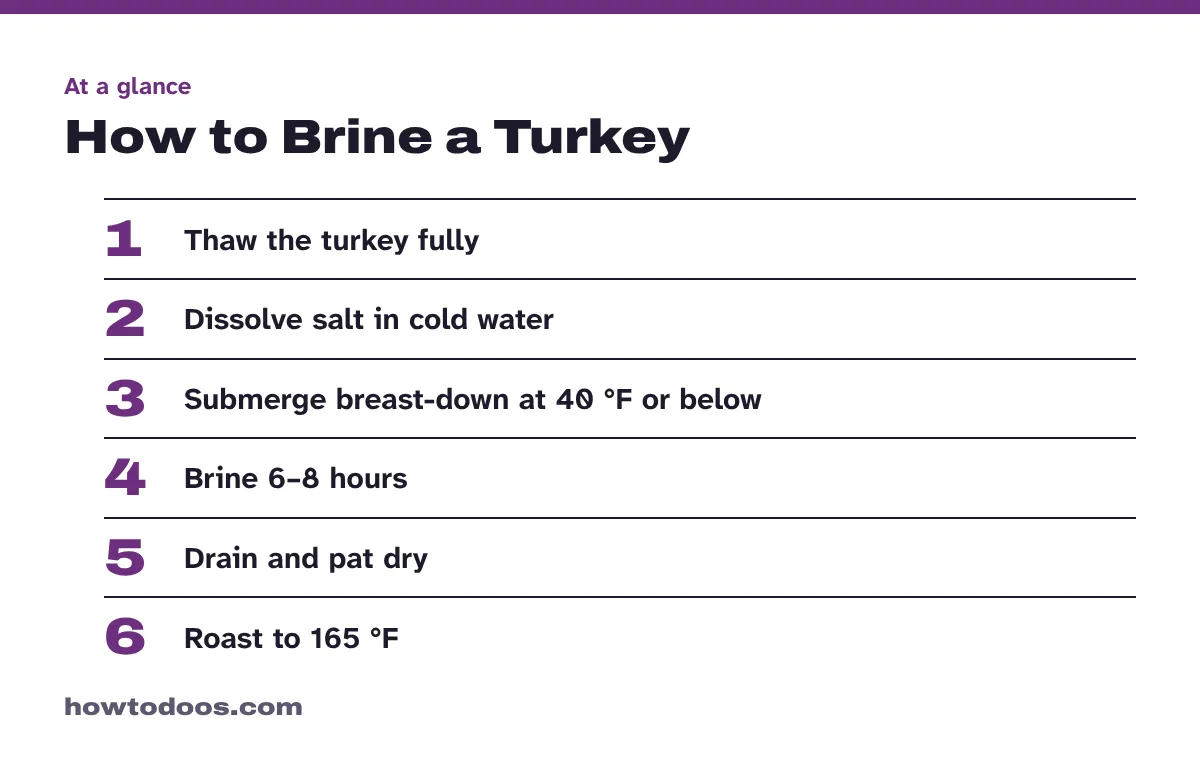
Brine a fully thawed turkey in salt water kept at 40 °F or below for 6–8 hours (never over two days), then pat dry and roast to 165 °F in the thigh, wing and breast.

7 steps in this guide
To brine a turkey, start with a fresh or fully thawed bird, dissolve the salt (and sugar, if using) completely in cold water, and submerge the turkey breast-down in a food-grade container. Keep the turkey and brine at 40 °F or below the whole time — in the fridge or a cooler packed with ice — for about 6 to 8 hours, then pat the bird dry and roast it until it reaches 165 °F.
The food-safety rules below come from the USDA’s guide to brining safely, and the brine recipe and timings come from University of Illinois Extension’s turkey brine method. With Thanksgiving on Thursday, November 26, 2026, plan to brine the day before you cook.
What you need
- A fresh or completely thawed turkey (Illinois Extension notes brining is most manageable with a 12–14 lb bird)
- Kosher salt or table salt, plus sugar (optional)
- Cold water — about 2 gallons for a 12–14 lb turkey
- A large container made of food-grade plastic, stainless steel or glass, or a brining bag
- Fridge space, or a cooler with 5–6 ice packs
- Paper towels and a shallow roasting pan
- A food thermometer
- Optional: dried bay leaves, thyme or other dried herbs
Still frozen? Follow our guide on how to thaw a turkey safely first — allow about 24 hours in the fridge for every 4–5 lb.
Steps
Step 1: Plan your brining day
A wet brine takes 6 to 8 hours, and Illinois Extension recommends starting the day before you plan to cook so the skin can also dry overnight. For a Thursday dinner, brine on Wednesday morning and roast on Thursday. Don’t stretch it out: the USDA says do not brine any longer than two days, and a fresh raw turkey only keeps for one to two days in the refrigerator anyway.
Step 2: Prepare the turkey
Remove the giblet bag and neck from the cavity. The USDA advises not to wash the turkey before brining — rinsing raw poultry splashes bacteria around your sink and counters without making the bird any safer.
Step 3: Make the brine
In your container, dissolve 4 cups of kosher salt or 2 cups of table salt in 2 gallons of cold water, then add 1 cup of sugar if you like (Illinois Extension’s recipe). Stir until the water looks clear, not cloudy — that means the salt and sugar have fully dissolved.
Add a few crushed bay leaves or sprigs of dried thyme for flavour if you wish. If you heat the brine to dissolve the salt or infuse herbs, the USDA says to cool it to room temperature before using it — then chill it further so it goes in cold.
Step 4: Submerge the turkey and keep it cold
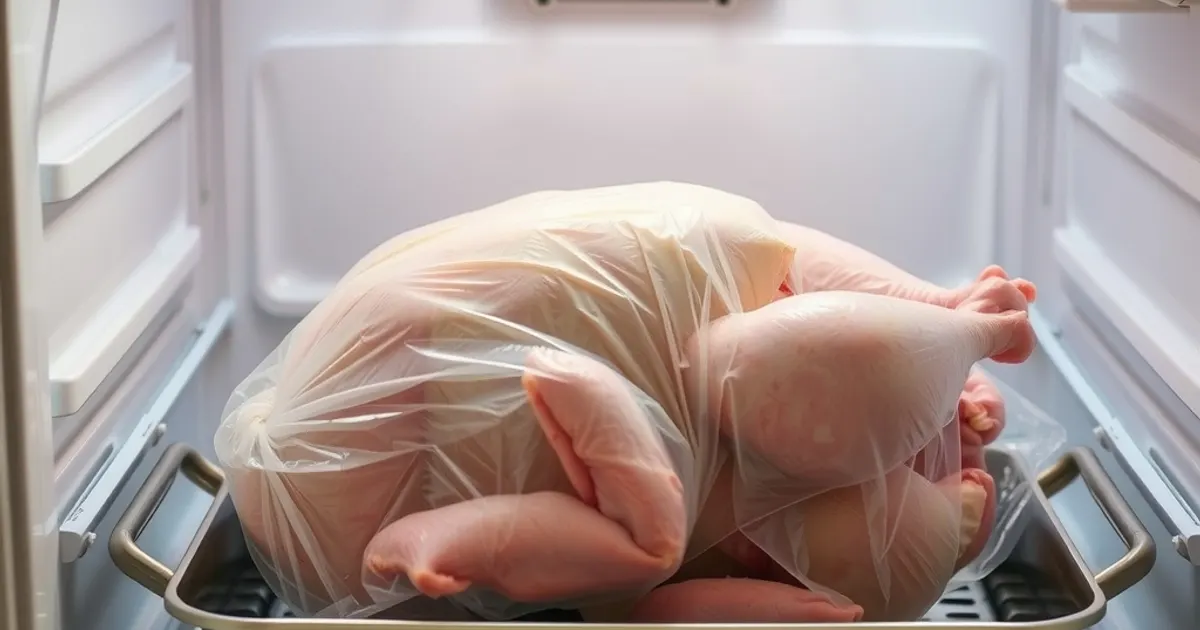
Place the turkey breast-down in the brine so the breast meat stays fully submerged. Cover the container and put it straight into the refrigerator.
If the bird won’t fit in your fridge, use a clean cooler with 5–6 ice packs. Either way, the turkey and brine must stay at 40 °F or below for the entire brining time — never leave the turkey sitting out at room temperature. Check the cooler with a thermometer and add ice if it starts to warm up.
Step 5: Brine for 6 to 8 hours
Leave the turkey in the brine for 6 to 8 hours. If you’d rather brine overnight, Illinois Extension says to cut the salt and sugar by half so the meat doesn’t absorb too much salt.
Step 6: Remove, drain and dry
Lift the turkey out and let the brine drain from the cavity. Discard the used brine, since it has held raw poultry. According to the USDA, if you need to rinse, run cold water through the cavity only; there’s no need to scrub or rinse the rest of the turkey. Pat the skin dry with paper towels.
For crisper skin, set the turkey on a shallow pan and refrigerate it uncovered overnight so the skin dries out. Illinois Extension calls this step optional.
Step 7: Roast to 165 °F
Roast at 350 °F. Illinois Extension estimates about 3 hours and 15 minutes for a 12 lb turkey, plus 15 minutes for each additional pound. Cover the breast loosely with foil at first and remove the foil for the last 1 to 1½ hours so it browns.
The turkey is done when a food thermometer reads at least 165 °F in the innermost part of the thigh and wing and the thickest part of the breast. Let it rest before carving.
Tips
- Clean as you go. The USDA suggests sanitising sinks and counters that touched raw turkey or brine with 1 tablespoon of unscented liquid chlorine bleach in 1 gallon of water.
- Use a brining bag for small fridges. A bag set inside a roasting pan takes less room than a stockpot and protects the shelf from drips.
- Taste before you season. Brined meat is already salted, so go easy on salt in rubs and pan sauces until you’ve tasted the drippings.
- Leftovers: refrigerate cooked turkey within 2 hours (1 hour above 90 °F) and use it within 3 to 4 days, per the USDA.
Troubleshooting
- The turkey floats. Weigh it down with a heavy plate or a sealed bag of ice so the breast stays under the brine.
- The cooler got warm. If the brine has risen above 40 °F, the turkey hasn’t been held safely. Add ice early and check the temperature every few hours.
- The turkey is still icy inside. Brining isn’t a thawing method. Finish thawing in the fridge first so the brine can reach the meat evenly.
FAQ
How long should you brine a turkey?
Illinois Extension recommends 6 to 8 hours in a brine of 4 cups kosher salt (or 2 cups table salt) per 2 gallons of water. For an overnight brine, halve the salt and sugar. The USDA says never brine longer than two days.
Do you rinse a turkey after brining?
The USDA says not to wash the turkey before brining. Afterwards, rinse only the cavity with cold water if needed — there’s no need to scrub or rinse the rest of the bird. Pat it dry before roasting.
Can I brine a turkey in a cooler?
Yes. Use a clean cooler with 5–6 ice packs and keep the turkey and brine at 40 °F or below throughout, checking the temperature and topping up ice as needed.
Can you brine a frozen turkey?
Start with a fresh or completely thawed turkey. Thaw it in the refrigerator first, then brine.
What temperature should a brined turkey be cooked to?
At least 165 °F, checked with a food thermometer in the innermost part of the thigh and wing and the thickest part of the breast — the same as an unbrined turkey.
Conclusion
Brining a turkey is simple once you’ve got the timing right: thaw fully, dissolve the salt, keep the bird breast-down in cold brine at 40 °F or below for 6 to 8 hours, then dry it and roast to 165 °F. Start the day before cooking and you’ll have a well-seasoned bird with time left for the sides — like our homemade cranberry sauce. For other cooking methods, see our main turkey cooking guide.