How to Spot and Report Fake Delivery Texts – Step-by-Step Guide
 James Mitchell
In short
Don't tap the link. Check the tracking number on the carrier's official site, forward the text to 7726 (SPAM), report it at ReportFraud.ftc.gov, then delete it.
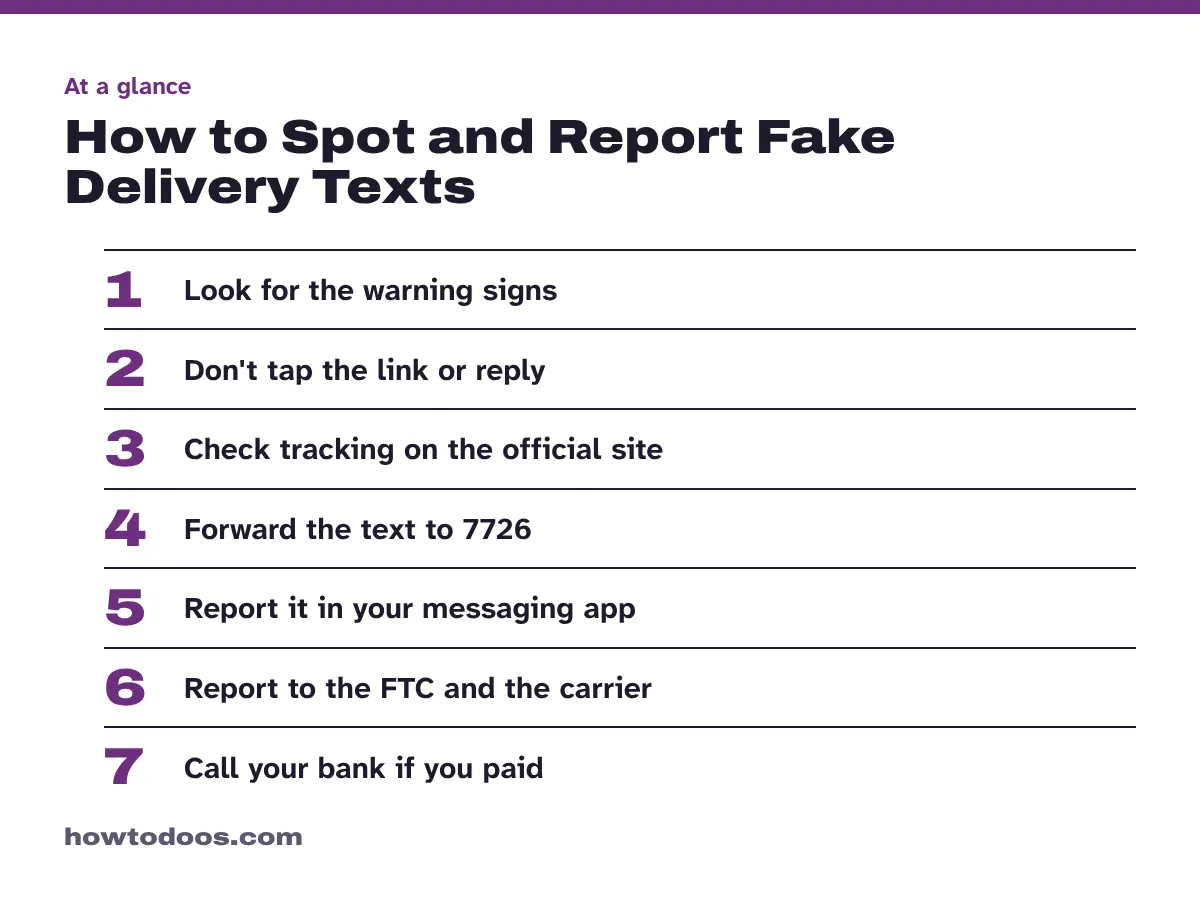
7 steps in this guide
A fake delivery text is a message that claims a parcel is stuck, needs a new address or needs a small fee, and asks you to tap a link. To deal with one, don’t tap the link: check your parcel on the carrier’s own website or app, forward the text to 7726 (SPAM), report it to the FTC at ReportFraud.ftc.gov, then delete it. If you already tapped the link or paid, call your bank straight away.
These texts spike during Black Friday and holiday shopping, when most people really are waiting for parcels. According to the Federal Trade Commission, people reported losing $470 million to scams that started with a text in 2024, and fake package delivery was the most commonly reported type of text scam. The steps below follow the FTC’s advice and the carriers’ own fraud pages.
What you need
- The suspicious text, still unopened (don’t tap anything in it)
- Your order confirmation email, or the tracking number from the shop you bought from
- The official website or app of the carrier (USPS, UPS, FedEx) or the retailer, opened yourself — not from the text
- A few minutes to forward and report the message
Steps
Step 1: Look for the warning signs
Most fake delivery texts share a few tells. Treat the message as a scam if it:
- Arrives without you signing up for texts. The US Postal Inspection Service says USPS will not send texts or emails without a customer first requesting the service with a tracking number, and those messages will not contain a link.
- Asks for money, card details or personal information. FedEx says it does not ask for payment or personal information by unsolicited mail, text or email in return for goods in transit. UPS says it does not ask for payments, personal or financial information, account numbers or passwords in an unsolicited way.
- Comes from a personal 10-digit phone number or an email address instead of a short code. FedEx specifically warns about texts from personal 10-digit numbers.
- Creates urgency — “your parcel will be returned today”, “final notice”, “pay a $1.99 redelivery fee”. USPS states on its scam alerts page that it does not charge a fee for redelivery.
- Has a strange link — misspelled carrier names, extra words, unusual endings, or a shortened URL.
- Mentions a parcel you aren’t expecting, or doesn’t include a tracking number you can match to an order.
Step 2: Don’t tap the link or reply
Don’t tap the link, call the number in the message or reply — not even “STOP”. The FTC advises that if you get a text you weren’t expecting and it asks for personal or financial information, you shouldn’t click on any links. Replying tells the sender your number is active.
Step 3: Check your parcel on the official site
If you really are waiting for something, check it yourself. Open the carrier’s website or app by typing the address or using an app you already have, and enter the tracking number from your order confirmation — not one copied from the text. The FTC’s advice is to contact the company “using a website or phone number you know is real” and not to use the information in the message.
UPS notes that only a few parcels need money on delivery — collect on delivery, duties or taxes — and that tracking your package is the safest way to see if any fees are due. If the official tracking page shows no problem, the text is fake.
Step 4: Forward the text to 7726 (SPAM)
Copy the message and forward it to 7726 (the numbers spell SPAM on a keypad). The FTC explains that this helps your wireless provider spot and block similar messages in the future. USPS also asks people to forward smishing texts to 7726 to help report the scam phone number.
Step 5: Report it in your messaging app
Your phone can flag the sender too:
- iPhone (Messages): open the conversation and look for Report Junk under the message, then confirm. Apple explains the options in its guide to blocking, filtering and reporting messages.
- Android (Google Messages): touch and hold the conversation, then tap Block, then Report spam, then OK. Inside a conversation you can tap More options > Details > Block & report spam, per Google’s help page. The message moves to your “Spam & blocked” folder.
Step 6: Report it to the FTC and the carrier
Reporting helps investigators track the scam:
- FTC: file a short report at ReportFraud.ftc.gov.
- USPS look-alikes: the Postal Inspection Service asks you to copy the body of the text (without clicking the link), paste it into a new email to spam@uspis.gov, and attach a screenshot that shows the sender’s number and the date it was sent.
- FedEx look-alikes: forward the fraudulent message to abuse@fedex.com, as listed on the FedEx fraud page.
- UPS look-alikes: use the “Email UPS” fraud form linked from the UPS fight fraud page.
Then delete the message.
Step 7: Act fast if you tapped the link or paid
If you entered card details or paid a “fee”, call your bank or card issuer using the number on the back of your card and ask them to block the card — the Postal Inspection Service says anyone who interacted with the link should notify their financial institution. If you typed a password on the fake page, change it on the real site and anywhere else you reused it, and turn on two-step verification. Watch your statements over the next few weeks, and report the loss at ReportFraud.ftc.gov.
Tips
- Turn on spam filtering. The FTC notes that your phone may have an option to filter and block spam or messages from unknown senders, and that most wireless providers offer blocking tools.
- Track from the shop, not the text. Use the tracking link in your order confirmation email or the retailer’s app.
- Sign up for official alerts on purpose. If you want delivery texts, start them yourself from the carrier’s site, so anything you didn’t ask for stands out.
- Warn family members. Older relatives and teens often get the same messages during the holidays. Our guide on how to freeze your credit is worth sharing if anyone has handed over personal details.
Troubleshooting
- Forwarding to 7726 doesn’t work. Ask your wireless provider how it wants spam reported, and report the text in your messaging app and at ReportFraud.ftc.gov in the meantime.
- You can’t find the report option. Update your phone and messaging app, then check Apple’s or Google’s help page linked above — you can always block the number from the conversation details.
- You can’t tell if a text is real. Assume it isn’t. A genuine delivery problem will show on the official tracking page, and UPS says a real representative will always be able to give you a tracking number.
- You keep getting new texts from different numbers. Blocking stops one number at a time; keep reporting them so your carrier and app can filter the pattern.
FAQ
How do I know if a USPS text is real?
USPS only sends texts if you signed up with a tracking number, and the Postal Inspection Service says those messages will not contain a link. A text claiming to be from USPS that you didn’t request, or that asks you to tap a link or pay a fee, is fake. Check the tracking number on the official USPS site instead.
What happens if I click on a fake delivery text link?
Opening the page alone may not cost you anything, but don’t enter any details. If you typed a card number, paid a fee or entered a password, contact your bank right away, change the password on the real site, and report it at ReportFraud.ftc.gov.
Does UPS or FedEx text you for payment?
FedEx says it does not ask for payment or personal information through unsolicited texts or emails. UPS says only a few parcels need money for delivery — collect on delivery, duties or taxes — and that tracking your package on its own site is the safest way to see if any fees are due.
How do I report a scam text?
Forward it to 7726 (SPAM), report it as junk or spam in your messaging app, and file a report at ReportFraud.ftc.gov. For texts pretending to be USPS, also email the copied text and a screenshot to spam@uspis.gov.
Should I reply STOP to a scam text?
No. Replying confirms your number is active and may lead to more messages. Report and delete the text instead.
Conclusion
Fake delivery texts work because they arrive when you’re expecting parcels. The fix is the same every time: don’t tap, check the tracking number on the carrier’s real site, forward the text to 7726, report it in your messaging app and at ReportFraud.ftc.gov, and delete it. If you’ve already shared card details, call your bank first — speed matters more than anything else.