How to Make Mashed Potatoes – Step-by-Step Guide
 Jessica Williams
In short
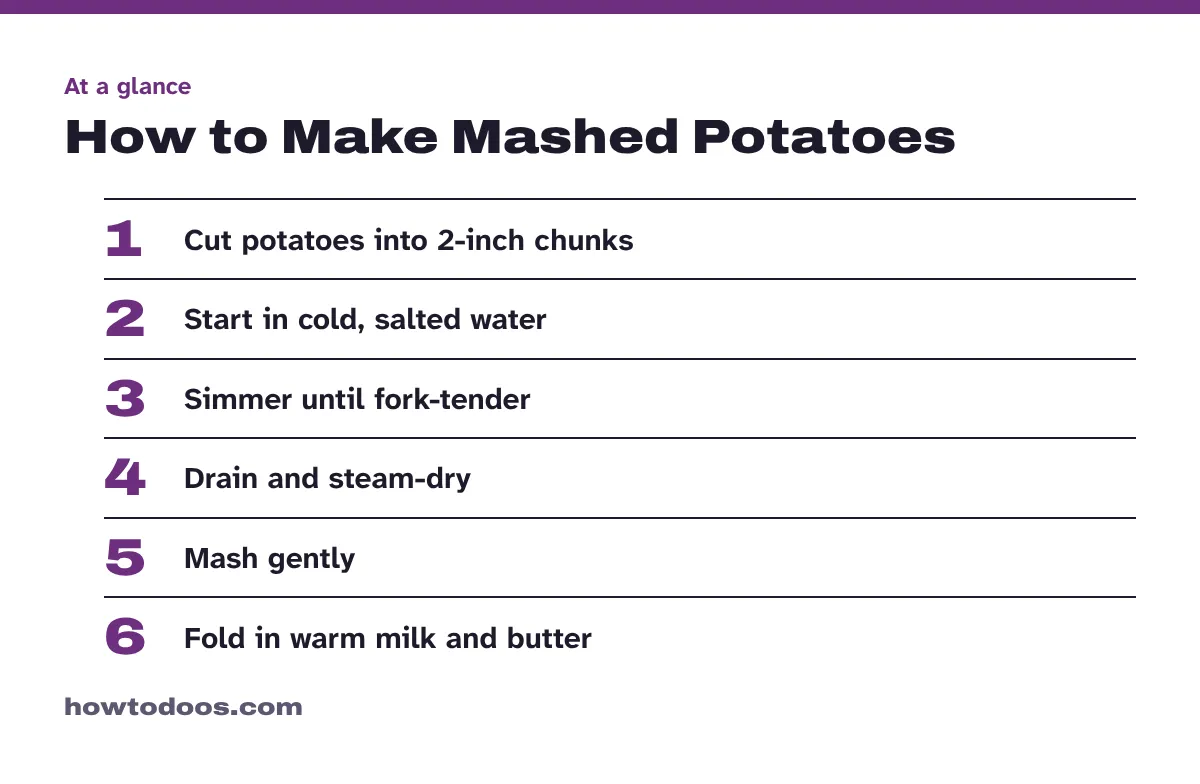
Cut potatoes into 2-inch chunks, start them in cold water, simmer until fork-tender, drain, then mash with warm milk and butter added a little at a time.

8 steps in this guide
To make mashed potatoes, peel and cut the potatoes into even 2-inch chunks, put them in a pot of cold water, bring it to a boil and simmer until a knife slides in with no resistance. Drain well, let the steam escape, then mash and fold in warm milk and butter a little at a time. That’s the whole method — the details below are what make the difference between fluffy and gluey.
The method and quantities follow the Potatoes USA mashed potato guide, variety and storage advice comes from the NDSU Extension pocket guide to preparing potatoes, and leftover safety follows University of Minnesota Extension. Thanksgiving falls on Thursday, November 26, 2026, so there’s time for a practice batch first.
What you need
For about 12 servings (halve everything for 6):
- 4 lb potatoes — russets for light and fluffy, or Yukon Gold / red potatoes for rich and creamy
- 2 cups whole milk
- 12 tablespoons (1½ sticks) unsalted butter, softened
- Kosher salt and black pepper, to taste
- A large stockpot and a colander
- A vegetable peeler and a sharp knife
- A potato ricer, food mill or hand masher
- A small saucepan for warming the milk and butter
- A rubber spatula
Steps
Step 1: Choose your potatoes
The variety decides the texture. Potatoes USA says russets “are best for light and fluffy mashed potatoes” because they are starchier and lower in water, while red, white or yellow potatoes have a waxier texture that gives a rich, creamy mash. NDSU Extension lists Yukon Gold and red varieties such as Red Norland among its picks for mashing. Many cooks mix russets and Yukon Golds to get a bit of both.
Store raw potatoes in a cool, dark place — not the fridge. NDSU explains that cold storage can turn some of the starch into sugar, which makes potatoes brown faster when cooked. Cut off any green patches and remove sprouts before cooking.
Step 2: Peel, cut and rinse
Peel the potatoes (or leave red potatoes skin-on for a rustic mash) and cut them into even 2-inch chunks so they cook at the same rate. Potatoes USA suggests soaking the pieces in cold water for a few minutes, then rinsing two or three times until the water runs clear — this washes off surface starch that can make the mash sticky.
Step 3: Start them in cold water
Put the potatoes in a large stockpot and add cold water to cover them by about 1–2 inches. Add a good pinch of salt. Bringing the water and potatoes to a boil together, rather than dropping them into boiling water, helps the outsides and centres cook evenly so you don’t get mushy edges around a hard core.
Step 4: Simmer until fork-tender
Bring the pot to a boil over high heat, then turn it down to a steady simmer. Start testing after about 15 minutes: the potatoes are ready when a fork or knife goes in with no resistance. Potatoes USA notes it can take 20–45 minutes depending on chunk size, variety and altitude, and advises erring on the side of slightly overcooked — undercooked potatoes leave lumps no amount of mashing will fix.
Step 5: Warm the milk and butter
While the potatoes simmer, gently warm the milk and butter in a small saucepan until the butter melts. Don’t let it boil. Cold dairy cools the potatoes and is a common cause of gluey, lumpy mash.
Step 6: Drain and let the steam escape
Drain the potatoes in a colander and let them sit for 1–2 minutes so excess steam (and water) evaporates. For extra-fluffy results, tip them back into the hot, empty pot over low heat for a minute and shake gently to dry them further.
Step 7: Mash — gently
Press the hot potatoes through a ricer or food mill for the smoothest texture, or use a hand masher for a fluffier, slightly rustic finish. Avoid blenders, food processors and immersion blenders: Potatoes USA warns they overwork the starch and turn the potatoes sticky. A hand mixer works on low speed, but go easy, especially with waxy potatoes.
Step 8: Fold in the dairy and season
Pour in the warm milk and butter a little at a time, folding with a rubber spatula until the potatoes reach the texture you like. Adding it all at once can leave you with watery potatoes. Season with salt and pepper, taste, and adjust. Serve straight away, or keep warm (see Tips).
Tips
- Keep them warm, covered. Potatoes USA recommends making mashed potatoes close to serving time rather than far in advance. To hold them for a short while, cover the pot and keep it over very low heat, stirring now and then with a splash of warm milk.
- Flavour ideas: fold in roasted garlic, chopped chives, a spoon of sour cream or cream cheese, or swap some of the milk for warm chicken stock.
- Scale up evenly. For a bigger crowd, use two pots instead of one overcrowded pot so the potatoes cook evenly.
- Pair it up: if you’re cooking the whole feast, see our guides on how to cook a turkey and how to carve a turkey.
Troubleshooting
- Gluey or sticky: the starch was overworked (blender, food processor or too much mixing) or the dairy was cold. You can’t fully undo it — next time, rice or hand-mash and warm the dairy. Turn a gluey batch into potato cakes or a casserole topping.
- Lumpy: the potatoes were undercooked or cut unevenly. Press them through a ricer or sieve, or return them to the pot with a little warm milk and mash again over low heat.
- Watery: the potatoes weren’t drained well or the liquid went in too fast. Stir them over low heat for a few minutes to drive off moisture.
- Bland: mashed potatoes need more salt than you’d expect. Add it gradually and taste each time.
Storing and reheating leftovers
University of Minnesota Extension says leftovers should be refrigerated within 2 hours of cooking — if not, throw them out. Spread mashed potatoes in shallow containers (less than 2 inches deep) so they cool quickly, and keep your fridge at 36–38 °F so food stays at 40 °F or below. The same guide gives cooked dishes and casseroles 3 to 4 days in the fridge.
To reheat, put the potatoes in a microwave-safe dish with a splash of milk, cover with a vented lid, stir halfway through, let stand for 2 minutes, then check with a food thermometer that they’ve reached 165 °F.
FAQ
What are the best potatoes for mashed potatoes?
Russets give the lightest, fluffiest mash because they’re starchy and low in water. Yukon Gold and red potatoes give a denser, creamier, more buttery mash. Both work — or use half of each.
Should you start potatoes in cold or boiling water?
Cold. Put the cut potatoes in cold water and bring them to a boil together so they cook evenly from the outside to the centre.
How long do you boil potatoes for mashed potatoes?
Simmer 2-inch chunks until a fork slides in with no resistance. Start checking at about 15 minutes; depending on size, variety and altitude it can take 20–45 minutes.
Why are my mashed potatoes gluey?
Overworking releases too much starch. Blenders, food processors and long mixing are the usual culprits, along with adding cold milk or butter. Use a ricer or hand masher and warm dairy.
Can you make mashed potatoes ahead of time?
They’re best made close to serving. If you do make them ahead, cool them in shallow containers and refrigerate within 2 hours, then reheat with a splash of milk until they reach 165 °F.
Conclusion
Great mashed potatoes come down to a few habits: even 2-inch chunks, a cold-water start, cooking until truly tender, drying them off, mashing gently and adding warm milk and butter gradually. Get those right and you’ll have a fluffy, creamy side that’s ready for gravy — and leftovers that stay safe for the days after the meal.