How to Deep Fry a Turkey Safely – Step-by-Step Guide
 Jessica Williams
In short
Fry a fully thawed, dry turkey of 12 lb or less outdoors in oil at 350 °F for about 3–5 minutes per pound, until the thigh, wing and breast reach 165 °F.

9 steps in this guide
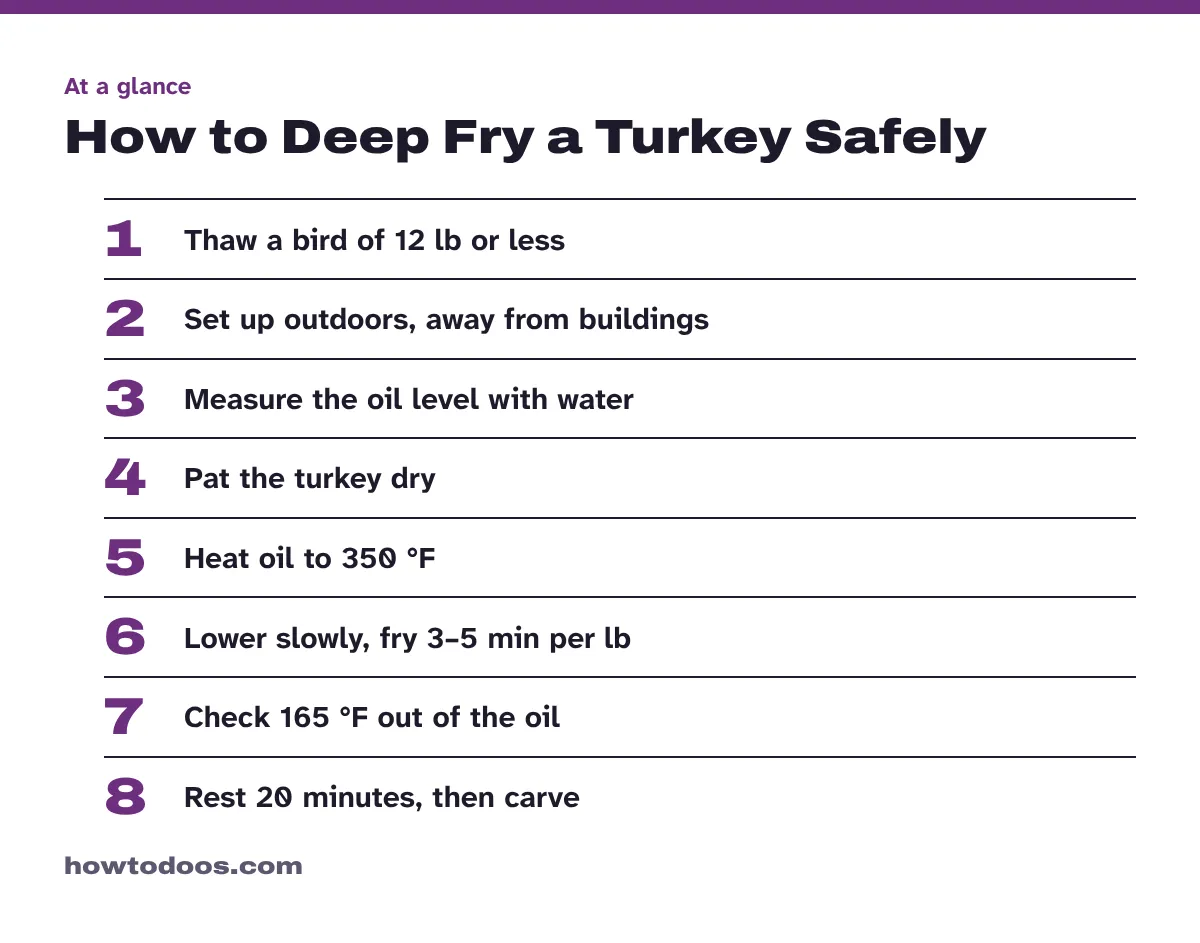
To deep fry a turkey safely, use a fully thawed, patted-dry bird of 12 lb or less, set the fryer up outdoors well away from buildings, heat the oil to 350 °F and fry for about 3 to 5 minutes per pound. Lift the turkey out and check that the thigh, wing and breast read at least 165 °F, then rest it for 20 minutes before carving.
The temperatures and times below come from the USDA’s turkey frying advice and University of Illinois Extension; the fire-safety rules come from the National Park Service fire prevention team and the City of Bismarck’s fryer tips. Frying is riskier than roasting — fire safety groups discourage outdoor gas fryers and suggest an electric turkey fryer as the safer choice — so read your fryer’s manual too and follow its limits.
What you need
- A whole turkey of 12 lb or less, fresh or completely thawed, not stuffed (or turkey parts)
- A turkey fryer with pot, basket or rack and lifting hook — outdoor propane or an electric model
- Oil with a high smoke point, such as peanut, refined canola, corn, safflower or sunflower oil (a large pot can take around 5 gallons)
- A deep-fry thermometer for the oil and a separate food thermometer for the meat
- Paper towels, a ruler or tape, heavy oven gloves and long sleeves
- A fire extinguisher suitable for grease fires, placed nearby
- A flat, open outdoor spot on dirt or concrete — not a wooden deck, garage or covered patio
Steps
Step 1: Pick the right turkey and thaw it completely
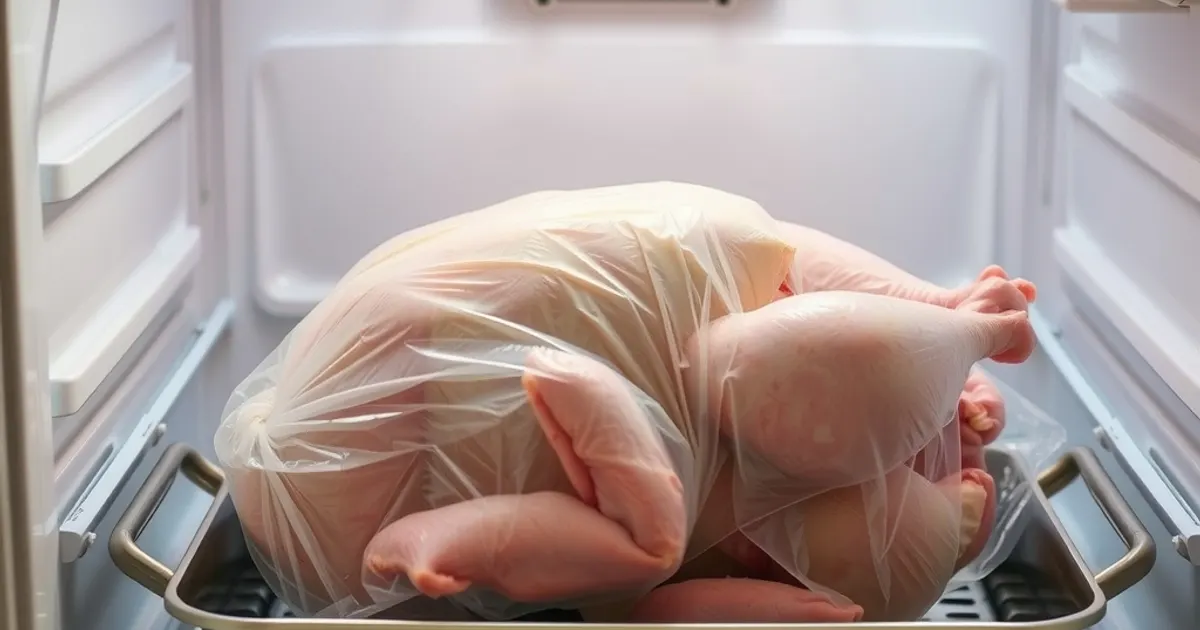
The USDA recommends frying a bird no larger than 12 pounds; for a bigger crowd, fry two small turkeys or separate parts such as breasts and thighs. The turkey must be completely thawed — ice and water hitting hot oil cause violent splattering and flare-ups. In the fridge, allow about 24 hours for every 4–5 lb; see our guide on how to thaw a turkey for the full timetable.
Never stuff a turkey you plan to fry.
Step 2: Choose a safe spot for the fryer
Set the fryer on a flat, level surface outdoors, a safe distance from your house, trees and anything that can burn. The National Park Service and Bismarck fire officials both warn against using a fryer on a wooden deck, under a covered patio or in a garage. Keep children and pets well back — the oil stays dangerously hot for hours.
Step 3: Measure the oil level with water first
Overfilling is the classic cause of fryer fires: when the bird goes in, the oil rises and spills onto the flame. Work out the right level before any oil is involved:
- Put the turkey in the basket and lower it into the empty pot.
- Add water until it covers the turkey by about 1 to 2 inches.
- Lift the turkey out and mark the water line (or measure from the water to the rim with a ruler).
- Pour out the water and dry the pot completely — inside and out.
That line is your oil fill level. If it’s above your fryer’s maximum fill line, the turkey is too big for the pot.
Step 4: Dry and season the turkey
Remove the neck and giblet bag from the cavity, then pat the turkey dry inside and out with paper towels. Any water left in the cavity will spit when it meets the oil. If you’re using a rub, keep it dry; if you inject a marinade, wipe the skin dry afterwards. Bismarck’s tips specifically warn to be careful with marinades for this reason.
Step 5: Heat the oil to 350 °F
Fill the dry pot with oil to the mark from Step 3. Heat it to 350 °F, the temperature given by both the USDA and Bismarck, watching the deep-fry thermometer the whole time. Never leave heating oil unattended. If the oil starts to smoke, turn the gas off immediately — it’s overheating.
Step 6: Lower the turkey in slowly
Wearing heavy gloves and long sleeves, put the turkey in the basket and lower it into the oil very slowly with the hook, standing to the side rather than over the pot. Many fryer manuals tell you to turn the burner off while you lower the bird — follow yours. Once it’s submerged and the bubbling calms, bring the oil back to about 350 °F.
Step 7: Fry for about 3–5 minutes per pound
The USDA and Illinois Extension both give about 3 to 5 minutes per pound, so a 10 lb bird takes roughly 30 to 50 minutes and a 12 lb bird roughly 36 to 60 minutes. Stay with the fryer, keep the oil near 350 °F and keep the extinguisher within reach.
Step 8: Lift it out and check the temperature
Turn off the burner, then lift the turkey out slowly and let the oil drain from the cavity back into the pot. Check the temperature out of the oil — the USDA says never to test it while the turkey is still submerged. A food thermometer should read at least 165 °F in the innermost part of the thigh and wing and the thickest part of the breast. If any spot is under, lower it back in for a few more minutes and check again.
Step 9: Rest, carve and let the oil cool
Rest the turkey on a tray for about 20 minutes so the juices set, then carve it — our guide on how to carve a turkey walks through it. Leave the fryer where it is until the oil has cooled completely before you move, store or dispose of it.
Tips
- Frying for more than 12 lb of guests? Fry two small birds one after the other, or fry breasts, thighs and wings separately — parts cook faster and fit the pot more easily.
- Peanut oil and allergies: peanut oil is a common choice, but check whether any guest has a peanut allergy and use canola, corn or sunflower oil instead if you’re unsure.
- Consider an electric fryer: the National Park Service fire team points to electric turkey fryers as a safer alternative to open-flame gas models. Whatever you use, follow the manufacturer’s size limit and oil line exactly.
- Leftovers: refrigerate carved turkey within 2 hours of cooking — see how to store Thanksgiving leftovers.
Troubleshooting
- Oil is foaming or rising fast: the turkey is probably wet or not fully thawed. Lift it out slowly, turn off the heat, and dry the bird again before trying once more.
- Oil is smoking: turn the gas off straight away and let the temperature fall before continuing.
- The skin is dark but the inside is under 165 °F: the oil was too hot. Let it drop back to 350 °F and finish frying.
- A grease fire starts: never use water. Turn off the gas if it’s safe to reach, use a fire extinguisher, and call 911 if the fire grows.
FAQ
How long do you deep fry a turkey per pound?
About 3 to 5 minutes per pound in oil held at 350 °F, according to the USDA. Always confirm doneness with a food thermometer: 165 °F in the thigh, wing and thickest part of the breast.
What temperature should the oil be to fry a turkey?
Heat the oil to 350 °F before the turkey goes in and keep it close to that while frying. University of Illinois Extension preheats a little higher, to 365–375 °F; whichever you follow, use a deep-fry thermometer and don’t let the oil smoke.
How big a turkey can you deep fry?
The USDA advises frying a turkey no larger than 12 pounds. Bigger birds need more oil, take longer and are harder to lower and lift safely — fry parts or two smaller birds instead.
How much oil do you need to fry a turkey?
It depends on your pot and your bird, which is why you measure with water first (Step 3). As a guide, Illinois Extension says about 5 gallons of oil for an 8–10 lb turkey in a typical outdoor fryer.
Can you deep fry a frozen or partly frozen turkey?
No. Ice and water in hot oil cause dangerous splattering, boil-overs and fires. The turkey must be completely thawed and patted dry before frying.
Conclusion
Deep-fried turkey is fast and juicy, but it only stays a treat if you treat the oil with respect: a small, fully thawed and dried bird, the fryer outdoors on a safe surface, the oil level measured with water first, oil at 350 °F, and a thermometer check of 165 °F before carving. Keep the extinguisher close, never leave the fryer alone, and let the oil cool completely before you clean up.