
How to Pick a Watermelon – Step-by-Step Guide
 Jessica Williams
In short
Pick a firm, dull-skinned watermelon that feels heavy for its size, has a creamy yellow ground spot underneath, a dry brown stem and dark webbing; skip shiny ones.
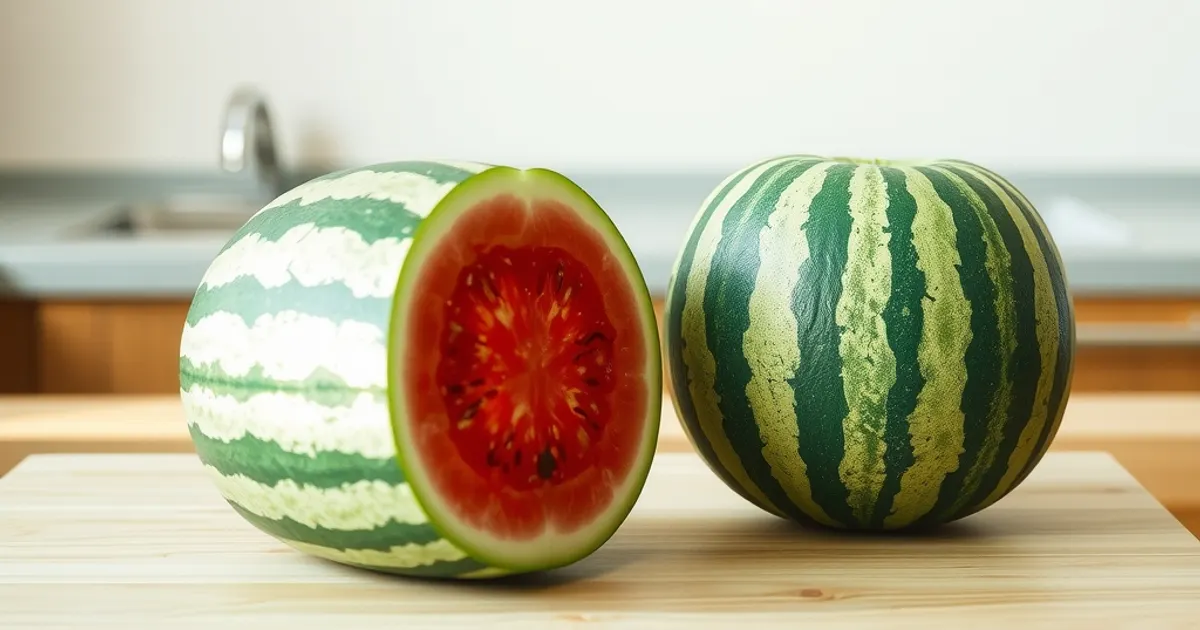
6 steps in this guide
To pick a ripe watermelon, look for one that is firm and free of bruises, lift it to make sure it feels heavy for its size, and turn it over to find a creamy yellow spot where it rested on the ground. A dull rather than shiny rind, a dry brown stem and dark, scar-like webbing are extra signs that the melon ripened fully in the field. Thumping it tells you much less than most people think.
The checks below come from the National Watermelon Promotion Board and horticulture specialists at Texas A&M AgriLife, the University of Arkansas Division of Agriculture and the Alabama Cooperative Extension System.
What you need
- A few watermelons of similar size to compare (whole melons, not pre-cut)
- Your hands and eyes — no tools required
- A cool, shaded spot at home to store the melon
Steps
Step 1: Look it over for damage
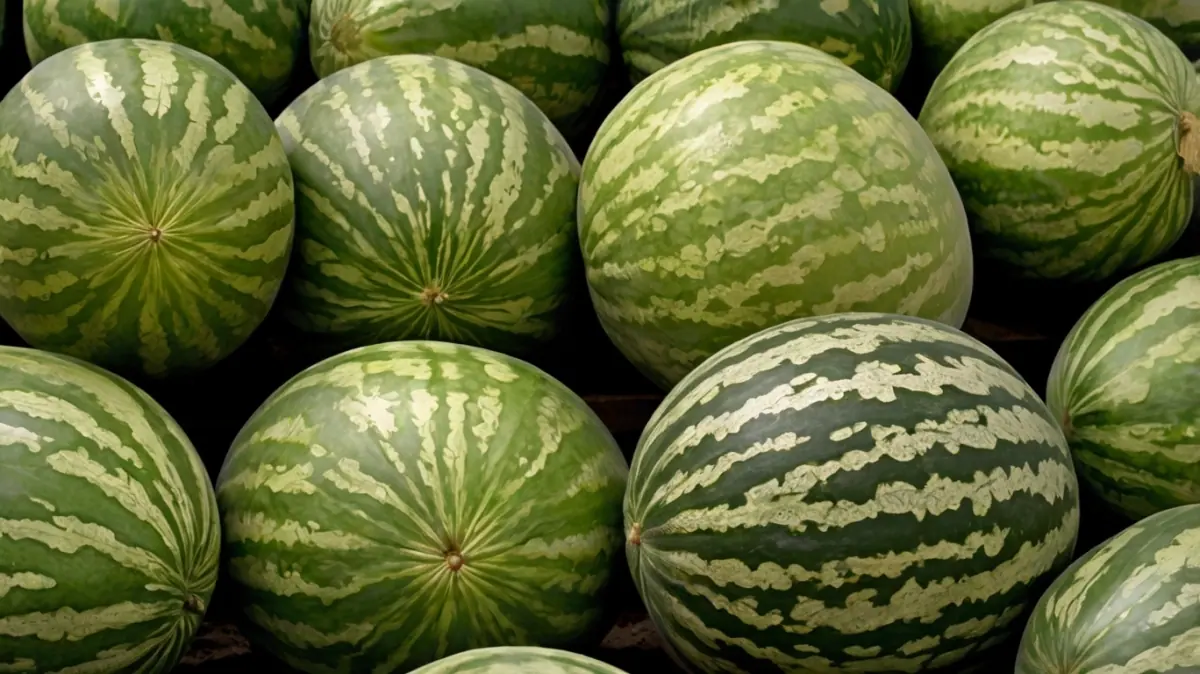
Start with the outside. The Watermelon Board’s “look, lift, turn” method begins with choosing a melon that is firm, symmetrical and free from bruises, cuts or dents. Small surface scratches are normal, but soft patches, cracks or leaking spots mean the flesh may already be breaking down.
Step 2: Lift it and compare the weight
Pick up two or three melons of about the same size. Watermelon is about 92% water, so the Watermelon Board and Texas A&M both say a ripe one should feel heavy for its size — the heavier melon is likely the juicier one.
Step 3: Turn it over and check the ground spot
Roll the melon over to find the field spot (or ground spot), the pale patch where it sat on the soil while it ripened. You want a large, creamy, almost butter-yellow spot, which Arkansas specialists say can even run to orange. A small, white or greenish spot usually means the melon was picked before it was ripe.
Step 4: Check the rind’s shine
Look at the surface in the light. Texas A&M AgriLife notes that the best melons look dull, while a shiny rind suggests the inside is underripe. Arkansas specialists also point to the waxy layer breaking down and slight ridging along the stripes as signs of maturity.
Step 5: Look at the stem and webbing
If the stem is still attached, it should be dry and brown, not green. Then look for webbing — the tan, greyish or brownish scar-like lines on the rind. University of Arkansas Extension says darker webbing goes with ripeness, and sums up an unripe melon as one with “a green stem, white bottom and light webbing.”
Step 6: Treat thumping as a tie-breaker only
Texas A&M says a ripe melon gives a deeper sound and an overripe one can sound hollow or flat. But Alabama Extension says thumping mostly tells you about rind thickness, not sweetness, and an Arkansas specialist admits he can’t hear the difference. Use it only if two melons pass every other check.
Tips
- Stripes and spots don’t predict sugar. Alabama Extension notes that stripe width and the mark on the blossom end come down to variety, not sweetness.
- Store whole melons cool and out of the sun. The Watermelon Board’s selection and storage guidance gives 50–59 °F (55 °F ideal) as the best range and says a whole melon keeps about 7–10 days at room temperature. Direct sun can scald the rind.
- Don’t freeze or over-chill a whole melon. The same guidance says a few days near freezing gives it an off-flavor and pitted rind, and freezing turns the flesh mealy.
- Wash the rind before cutting. The Watermelon Board stresses washing the outside before you cut. Rinse and scrub the outside under running water so the knife doesn’t carry dirt from the rind into the flesh.
- Refrigerate cut watermelon. Wrap cut pieces or put them in a sealed container in the fridge and eat them within a few days.
Troubleshooting
- It’s pale and bland inside: it was likely picked too early. It’s still good blended into smoothies or juice.
- The flesh is mushy or grainy: it’s overripe or was stored too cold or too warm. Check for a soft rind and a flat, dull sound next time.
- Every melon in the bin has a white ground spot: the batch was likely harvested early. Try another store or wait for a new delivery.
- You can’t tell between two good-looking melons: pick the heavier one.
FAQ
How can you tell if a watermelon is ripe without cutting it?
Turn it over. A large, creamy yellow ground spot is the most reliable sign, followed by a heavy feel for its size, a dull rind, a dry brown stem and dark webbing.
Does knocking on a watermelon tell you if it’s ripe?
Not reliably. A deep sound may point to ripeness, but Alabama Extension says thumping mostly reflects rind thickness, not sweetness. Use it only as a tie-breaker.
What color should the bottom of a watermelon be?
Creamy or butter yellow, sometimes orange. A white or green ground spot usually means the melon isn’t ripe.
Do wider stripes or brown spots mean a sweeter watermelon?
No. Alabama Extension says stripe width and the mark on the blossom end depend on the variety, not the sugar content. Ripe melons are at least 10% sugar, and only tasting tells you exactly how sweet one is.
How long does a whole watermelon last?
The Watermelon Board says about 7–10 days at room temperature, ideally somewhere cool (around 55 °F) and out of direct sun. Once it’s cut, keep it wrapped in the fridge and eat it within a few days.
Conclusion
Picking a good watermelon takes less than a minute. Check that it’s firm and undamaged, pick the heaviest one, look for a creamy yellow ground spot, then confirm with a dull rind, a dry stem and dark webbing. Skip the thumping test unless you’re stuck between two melons, and keep your pick cool and out of the sun until you cut it.