How to Create a Meditation Space at Home – Step-by-Step Guide
 Olivia Taylor
In short
Pick a quiet corner, clear it of screens and clutter, add a comfortable seat that supports good posture, keep lighting soft, and use the spot only for meditation.
8 steps in this guide
To create a meditation space at home, choose a quiet spot you can return to every day, remove screens and clutter, and add a seat that lets you sit comfortably with good posture. A corner of a room is enough — what matters is that the spot has few distractions and that you use it only for quiet practice.
The practical advice below follows the basics of meditation set out by Mayo Clinic and the U.S. National Center for Complementary and Integrative Health (NCCIH): a quiet setting, a comfortable position, a focus for your attention and an open, non-judging attitude.
What you need
- A small, quiet area — a room corner, alcove, spare closet or a spot by a window
- Something comfortable to sit on: a floor cushion, folded blanket or a chair with a firm back
- A soft rug or mat if you sit on the floor
- Gentle lighting you can control (a lamp, curtains or blinds)
- Optional focus objects: a plant, a candle, a small picture or a smooth stone
- A basket or box to keep the area tidy
- A timer that doesn’t need your phone screen (a kitchen timer works)
Steps
Step 1: Decide what the space is for
Think about how you’ll use it before you move furniture. Will you meditate alone or with your partner or family? Seated or lying down? In the morning or before bed? The answers decide how much floor space you need, whether you want a door you can close, and whether the spot should be private or somewhere you’ll see it as a reminder.
Step 2: Choose a quiet spot with few distractions
Mayo Clinic notes that meditation may be easier for beginners in a quiet spot, with fewer things that can distract you — including no television, computers or cellphones. That rules out the desk where you work and the sofa facing the TV.
Good options are a bedroom corner, the end of a hallway, a spare room, a large closet or a seat by a window. If your home is busy, pick the place and time that are quietest — early morning in a shared living room can work as well as a dedicated room.
Step 3: Clear the area
Remove anything that pulls your attention: piles of paperwork, laundry, chargers and screens. Keep surfaces bare and easy to clean. If the area has to double as something else during the day, keep a basket nearby so you can tidy it in a minute before you sit.
Step 4: Set up a comfortable seat
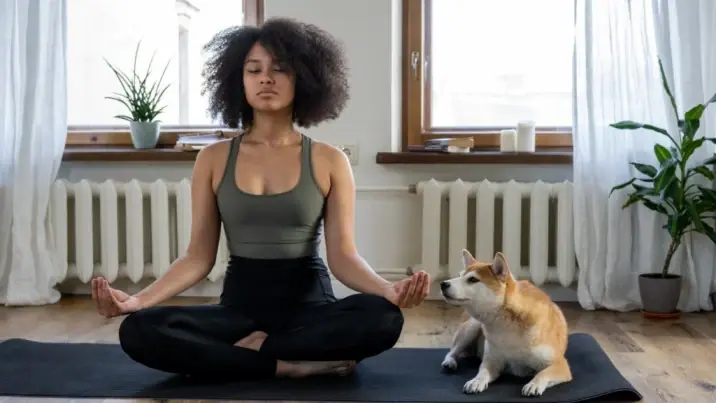
You can meditate sitting, lying down or even walking, according to Mayo Clinic — the aim is to be comfortable and keep good posture. For floor sitting, a firm cushion that lifts your hips above your knees makes cross-legged positions easier, and a rug or mat protects your ankles. If the floor isn’t comfortable, a chair with a straight back is just as good: sit with your feet flat and your back upright.
Step 5: Get the light and air right
Natural light is calming during the day, so a spot near a window helps. For evening sessions, a dimmable lamp or a candle (never left unattended) is gentler than overhead lighting. Make sure the space isn’t too hot or cold — keep a blanket within reach, because you’ll feel cooler when you sit still.
Step 6: Add one or two things that help you focus
Focusing your attention is one of the most important elements of meditation, says Mayo Clinic, and the focus can be an object, an image, a mantra or your breathing. Place a single plant, a candle, a meaningful photo or a smooth stone where your eyes rest. Keep it minimal: one or two items help focus, a crowded shelf becomes another distraction. Soft, muted colours are easier on the eye than bright patterns.
Step 7: Use the space only for practice
If the corner is only ever used for meditation, sitting down there becomes a simple habit cue to slow down. Keep work, phone scrolling and TV out of it, and return at roughly the same time each day.
Step 8: Start with a few minutes
You don’t need long sessions. Mayo Clinic says a few minutes a day is all you really need. Set your timer, settle into your seat and rest your attention on your breathing. When your mind wanders — it will — gently return to your focus and let thoughts pass without judging them.
Tips
- Small homes: a folding screen, a curtain or even a rug can mark out a meditation corner in a studio flat.
- Sound: if outside noise is a problem, a fan or soft background sound can mask it. Close windows facing a busy street.
- Plants: easy-care plants such as a snake plant or pothos add life without needing much attention.
- Shared spaces: agree a time with the people you live with, or hang a simple “back in 10 minutes” sign on the door.
- Outdoors: a quiet balcony or garden corner works in good weather — bring a cushion and a blanket.
Troubleshooting
- “I keep getting distracted.” Move your phone to another room, face the seat toward a wall or window rather than the rest of the room, and shorten your sessions until focus comes more easily.
- “My legs or back ache.” Raise your cushion higher, switch to a chair, or try lying down. Comfort matters more than a particular pose.
- “I don’t have a spare corner.” Keep a cushion and mat in a basket and set up the same spot each time — consistency is what makes it a meditation space.
Meditation is generally considered low-risk, but NCCIH notes that some people do have negative experiences, most commonly anxiety or depression. Mayo Clinic adds that meditation doesn’t replace medical treatment — if you have a health condition, talk to a healthcare professional about whether it’s right for you.
FAQ
How do I create a meditation space in a small apartment?
Pick one corner or a spot by a window, mark it out with a rug or mat, and keep your cushion and a single focus object there. Use a basket to store everything when you need the floor space, and set it back up in the same place each time.
What should I put in a meditation space?
Keep it simple: a comfortable seat (cushion, mat or chair), soft lighting, and one or two calming items such as a plant, a candle or a meaningful picture. Leave out screens and clutter.
Do I need a whole room to meditate?
No. A quiet corner, an alcove or a large closet is enough. What matters is that the spot has few distractions and that you use it consistently for meditation.
Where is the best place in the house to meditate?
Somewhere quiet, away from the TV, computer and busy walkways — often a bedroom corner, spare room or a seat by a window with natural light.
How long should I meditate each day as a beginner?
Start with a few minutes. Mayo Clinic says a few minutes a day is all you really need; you can lengthen sessions as it becomes a habit.
Conclusion
Creating a meditation space at home comes down to a quiet spot, a comfortable seat, soft light and as few distractions as possible. Keep it simple, use it only for practice, and start with a few minutes a day. If you also work from home, see our guide on setting up a work-from-home space to keep work and quiet time separate, and our tips on how to fall asleep fast for winding down at night.